

Global immunization efforts have achieved an 88% drop in measles deaths between 2000 and 2024. Yet this hard-won progress is under threat. An estimated 95,000 people, mostly children younger than 5 years of age, died due to measles in 2024, according to a new report from the World Health Organization (WHO). While this is one of the lowest annual tolls recorded since 2000, it remains tragically high for a disease that is preventable with a safe and highly effective vaccine.
The data show that cases continue to surge worldwide, with an estimated 11 million measles infections in 2024, nearly 800,000 more than pre-pandemic levels in 2019. In 2024, 59 countries reported large or disruptive measles outbreaks—nearly triple the number reported in 2021 and the highest since the onset of the COVID-19 pandemic. These outbreaks expose widespread immunization gaps that threaten communities everywhere.
“As a humanitarian organization, the American Red Cross cannot stand idle while so many continue to suffer from a preventable disease,” said Jarrett Barrios, senior vice president, International Services at the American Red Cross. “We are committed to the goals of the Partnership and will continue to leverage the strength of Red Cross volunteers to one day achieve a world without measles.”
The root cause is stagnating coverage. First-dose coverage remains at 84%, which is below pre-pandemic levels and far short of the 95% needed with two doses to stop transmission. Measles serves as a critical tracer for immunization system strength. When measles cases and the number of outbreaks increase, it signals broader vulnerabilities that put children at risk from all vaccine-preventable diseases. These surging outbreaks are a warning sign that cannot be ignored.
The burden falls heaviest on fragile, conflict-affected, and vulnerable settings, which suffered 71% of measles deaths despite representing only 13% of the world’s population.
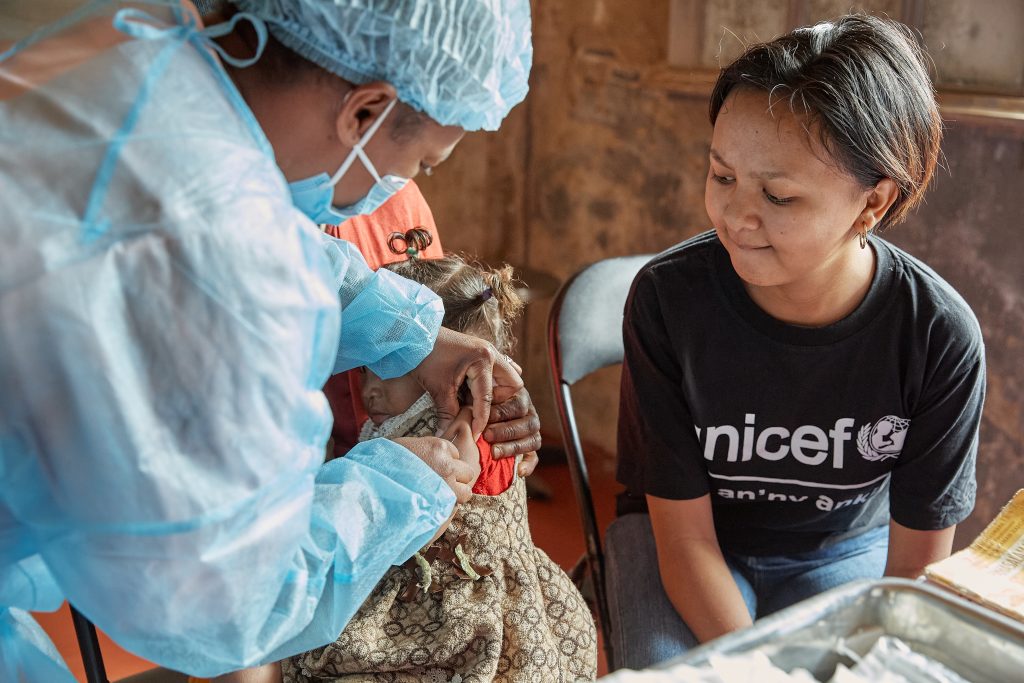
Photo credit: @UNICEF/UNI677239/Andriantsoarana
This crisis is unfolding against a backdrop of severe fiscal constraints. Global development assistance for health has plummeted between 2021 and 2024. The decline accelerated in 2025, driven primarily by reductions in support from major donors. These cuts are forcing impossible trade-offs, affecting health systems’ strength and resilience, particularly in low- and middle-income countries with fragile health systems where these cuts inflict the greatest harm.
The impact of limited resources is already clear: challenges raising routine coverage, conducting timely and high-quality supplementary immunization activities, prioritizing rubella vaccine introductions, and maintaining outbreak preparedness. The consequences are visible in weakened surveillance systems, strained laboratory networks, and immunization programs forced to do more with less.
We are also seeing both progress and setbacks on the road to measles and rubella elimination. By the end of 2024, 81 countries (42%) had eliminated measles, only three additional countries since before the pandemic. Additional progress has been made in 2025. Pacific island countries and areas were verified in September, while Cabo Verde, Mauritius and Seychelles were verified in November—the first such countries in the WHO African region. However, the region of the Americas recently lost elimination status due to ongoing transmission in Canada, demonstrating how fragile these gains remain when coverage drops below critical thresholds.
“Measles is the world’s most contagious virus, and these data show once again how it will exploit any gap in our collective defenses against it,” said Dr Tedros Adhanom Ghebreyesus, WHO Director-General. “Measles does not respect borders, but when every child in every community is vaccinated against it, costly outbreaks can be avoided, lives can be saved, and this disease can be eliminated from entire nations.”
The Measles & Rubella Partnership reaffirms that achieving and sustaining high measles-rubella coverage is a “must win” for global health. The path forward requires adapting to this resource-strapped environment by optimizing resources to maximize health impact, identifying opportunities for integration, and prioritizing sustainability. We must strengthen routine immunization and ensure effective supplementary immunization activities in the countries that need them most.
There is no other choice. We must invest now to protect every child or pay an even higher price later in outbreak response, treatment costs, and preventable deaths. We have the tools. We need continued global support and sustained investment to use them.
—
Additional quotes from M&RP members:
Rebecca Casey, Head of the Measles and Rubella Vaccine Programme at Gavi, the Vaccine Alliance, said: “Over 25 years, Gavi’s partnerships with lower income countries have saved millions of lives and prevented outbreaks. Over this time, Gavi has been proud to partner with lower-income countries in their efforts to reach the most vulnerable children – showing remarkable resilience, improving vaccination coverage and responding swiftly to emergencies. The rise in measles cases and outbreaks in regions around the world is a clear warning sign that we must not be complacent in our efforts to reach and maintain the high coverage rates needed to prevent outbreaks and deaths. Every child deserves protection from measles, and it is often the most vulnerable who are at greatest risk.”
Ephrem Tekle Lemango, UNICEF Associate Director of Immunization said: “The spread of measles in countries across the world, including those with strong health systems, should put everyone on high alert. Children pay the price when misinformation spreads, policies fall short, and access is limited — leaving them vulnerable to a disease that can cause pneumonia, brain swelling, severe dehydration, and death. No child should face those risks when a safe, effective vaccine has existed for decades. Rebuilding trust and closing immunity gaps is urgent to keep children protected.”










 Prelude Version 2.3.2